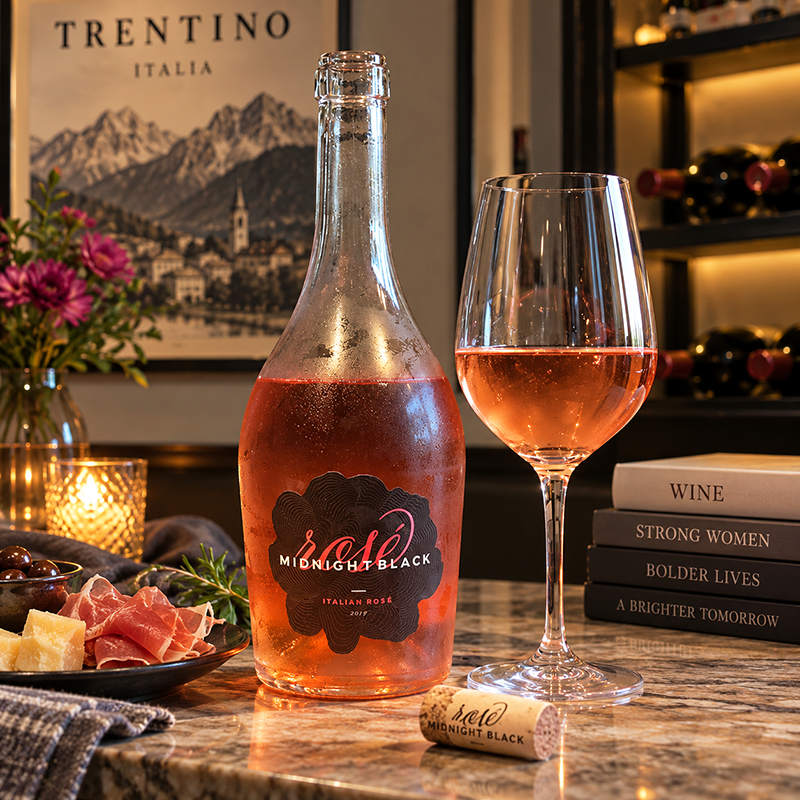
Italy’s Piave region covers a vast plain in the greater Veneto area. It is bordered on the south by the Adriatic Sea, to the northwest by the hills of Valdobbiadene and Conegliano, is crossed by the river Piave, and to the northeast it borders on the Friuli Venezia Giulia region. Wine has been made here for millenia, based on the archaeological discoveries that have been made. Moreover, the first Oenological School of Italy was founded there in 1876.
Tony Lombardi was born into a family of small business owners, and grew up in Sonoma County. His first job in the wine business came in 1998 when he joined the hospitality team at Clos Du Bois Winery, located in Geyserville, California.
In 1895, Samuele Sebastiani left his native Tuscany for America. Eventually arriving in Sonoma, California, he worked hauling paving stones for a local quarry that were used to build the streets of San Francisco. Perhaps looking for less demanding work, in 1904 he purchased winemaking equipment and made his first 500 gallons of wine. Just five years later, he had enough financial success to purchase the Sonoma Mission vineyard (planted in 1825 for sacramental wines), the site the Sebastiani winery occupies to this day.
Sebastiani was the only winery in Sonoma County to continue operations during Prohibition by making a small amount of sacramental and medicinal wines. This and fruit growing were the only ways wineries were able to survive. Nearly ten years after Prohibition was enacted, the Great Depression added to the struggle. Sebastiani initiated major projects at the winery to help keep people employed by canning peaches, nectarines, and pears. When there weren’t enough jobs at the winery, he built a skating rink, theater, motel, and meeting hall at the Catholic Church.
Following the repeal of the scourge of Prohibition, Samuele’s youngest son, August, joined the family business as winemaker. August purchased the winery from his late father’s estate in 1944. He expanded the business and began to sell name-branded wines.
In 1980, with August’s death the winery was passed down to his three children. The oldest, Sam, became CEO and President, and began to shift production from lower-cost products to upscale varietals. He left the company in 1986 to start his own business, and August’s youngest son, Don, ascended to control. During his first ten years, he increased production by 300%. In 2001 he established Don Sebastiani & Sons, a beverage holding company that includes wine, spirits, and water. Ironically, the portfolio does not include the original business, Sebastiani Vineyards, which was sold to the Foley Wine Group in 2008, which also owns Firestone Vineyards in Santa Barbara, Merus in Napa, and Three Rivers Winery in Washington state.
Smoking Loon Steelbird Rosé 2018
Smoking Loon, however, is one of the Don Sebastiani & Sons brands. The blend is 60% Barbera, 27% Syrah, and 13% Grenache, with an ABV of 12%. It is a petal pink color in the glass, and opens with fragrant aromas of strawberry, plum and cantaloupe. The palate features a lovely watermelon flavor, followed by tart rhubarb and finally juicy, fruit flavors of apricot, and strawberry. This well-balanced wine has good acidity and a fresh, crisp finish.
Smoking Loon claims “the label activates PINK when [the] wine is a perfectly chilled 50ºF.” but I didn’t see it.
Jean-Marc Burgaud Les Vignes de Lantignié Beaujolais 2017
Jean-Marc Burgaud was born into a family of generations of wine growers. After obtaining his diploma in oenology and wine-growing, he started his eponymous winery with his wife and partner Christine in 1989. He owns all of the vineyards he farms, with the majority (32 acres / 13 hectares) being in Morgon’s famed Cotes du Py, in the heart of the Beaujolais crus. He also owns an even tinier amount of Regnie (2.5 acres / 1 hectare) and Beaujolais Villages (10.3 acres / 4.2 hectares), from which this wine comes. Burgaud believes that the current total of his vineyards is the maximum area he can cultivate while still producing the quality he is after.
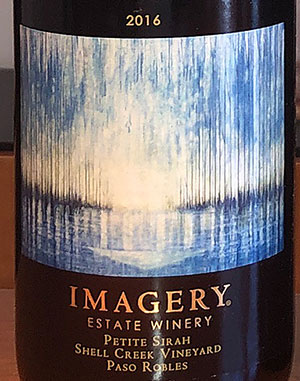
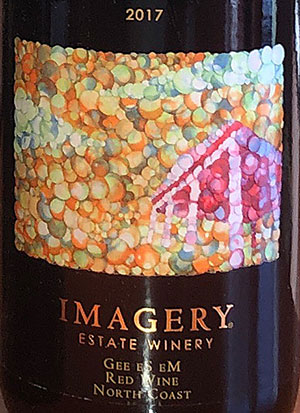
Imagery Sauvignon Blanc 2019 and Cabernet Sauvignon 2018
In 1973, newlyweds Mike and Mary Benziger drove west and permanently settled in Northern California. Seven years later, Mike and and his brother Bruno Benziger purchased the historic Wegener Ranch on Sonoma Mountain in Glen Ellen, California. Hearing the Sirens’ call of the Golden State, over the next six years the four remaining siblings — Bob, Joe, Jerry, and Patsy, with their spouses — made their way to California.
In my over forty years of drinking wine, I’ve had excellent bottles, bottles I’ve poured down the drain after drinking half a glass, and, mostly, everything in between. But over all of those years and thousands of wines, two have eluded me, my so-called “unicorn” wines.
I first learned of the Heitz Cellar Martha’s Vineyard Cabernet Sauvignon in the mid-’70s when a normally generous acquaintance was showing off an unopened bottle, with obviously no intention of sharing. Martha’s Vineyard was selling for about $30 at release then, far more than I could afford, so I wasn’t going to be enjoying it any time soon. But the desire was established.
On a winery tour through Napa valley in the mid-1990s, I stopped at Heitz’s “tasting room,” on that visit literally a windowless construction trailer parked by the side of the road. I was about halfway through the tasting when I heard a car grind to a halt outside on the gravel. The door burst open, and the driver demanded, “I want to try the Martha’s Vineyard!” The bartender calmly responded, “We don’t pour the Martha’s Vineyard here.” (A fact I, sadly, already knew.) The door slammed shut, and he was off. Denied.
Martha’s Vineyard is now selling for $250 on release, and, really, I still can’t afford it. But during these uncertain times, I thought, “What the hell. I may never get a chance to drink this wine I’ve been lusting after for so long.” So here it is.
Born in Princeton, Illinois, Joe Heitz served in the Army Air Force during World War II, and moonlighted during off hours at a winery near Fresno. After the war ended, Heitz began taking classes at UC Davis, achieving a bachelor’s and then a master’s degree in viticulture and enology in 1951. in the first graduating class of just seven people. Heitz found employment at two wine industry extremes, first at Gallo, and then with the famous André Tchelistcheff at Beaulieu Vineyard as an assistant winemaker, where he worked for nearly ten years.
Joe Heitz. Photo: St. Helena Historical Society
Heitz Cellar was established in 1961, when, after serving his “apprenticeship,” in 1961 Heitz and his wife Alice bought a small 8.5 acre (3.4 ha) vineyard from Leon Brendel in St. Helena, California, named “The One & Only,” for $5,000, and went into business for himself. At the time, there were only about two dozen Napa Valley wineries, the lowest number since Prohibition. (Today there are over 1,700 registered wineries in Napa, but “only” about 500 have tasting rooms.) This pioneering winery even preceeded Robert Mondavi‘s 1966 start in nearby Oakville.
Photo: Jeremy Baines
In 1963, Heitz bought several barrels of Chardonnay and Pinot Noir from Hanzell Vineyards in Sonoma, the last vintages of James D. Zellerbach’s pursuit of Burgundian excellence and auctioned off by his widow. Heitz blended and sold the wines to lucrative acclaim.
One of his stated strategies for ongoing success was to pay growers, “what their grapes were worth,” in turn increasing the standard of the product he was receiving. In 1964, Heitz acquired an 1898 stone winery with its 160 acre (65 ha) ranch property, which became the Heitz winery and home.
Photo: Darcy K.
Since 1965, Heitz has held an exclusive agreement with Tom and Martha May, owners of the 34 acre (14 ha) Martha’s Vineyard in the Oakville AVA. He immediately recognized the quality of the grapes, and the very next year Heitz vinified the fruit separately from his other production, and designated the vineyard on the label. (Rather subtly, though. Many of Heitz’s red-wine labels, unchanged for decades, look almost identical. “Martha’s Vineyard” only appears in a small oval in the lower left corner.)
Martha’s Vineyard
“Standing in Martha’s Vineyard, you quickly realize why this site consistently produces a remarkable Cabernet Sauvignon. The vineyard receives gentle morning and early afternoon sunlight and is sheltered from the heat of the late afternoon sun by the mountains. This allows for longer hang time and Martha’s Vineyard is, historically, one of the last vineyards we pick. This ability to leave the fruit on the vine longer than other sites allows for concentration of flavor and softening of tannin to produce a wine so pure in its expression of place. The consistency in showcasing Martha’s Vineyard’s unique mint, bay leaf, dark berry and chocolate notes year after year is a reminder of why this vineyard has commanded a faithful following since the 1966 vintage.” –Brittany Sherwood, Winemaker
Heitz is considered the first to champion the single vineyard designation in the U.S. The 1968 vintage received attention for its quality, widely considered the greatest wine made in America up to that time. It was fermented in 1,000-US-gallon (38 hL) American oak vats, and then transferred to Limousin oak barrels where it aged for an additional two years. Frank J. Prial, the wine columnist for The New York Times from 1972 until 2004, contended the wine remained “the benchmark by which California Cabernets were judged” for more than two decades. (The 1970 vintage placed seventh at the Paris Wine Tasting of 1976, also known as the Judgment of Paris.)
Following a review by Robert Parker where he wrote that Martha’s Vineyard Cabernet Sauvignon “lacked aroma,” Heitz sent Parker a box of linen handkerchiefs, insinuating to the critic that he ought to clear his nose.
Joe Heitz suffered a stroke in 1996 which left him frail though lucid. He died on December 16, 2000, aged 81. He was described by Warren Winiarski, founder and former proprietor of Stag’s Leap Wine Cellars, as the first of the Napa Valley artisans and the first to grasp the single vineyard concept.
David Heitz succeeded his father as winemaker in the late 1970s, having worked at the estate for many years. In 1984, the estate purchased the Trailside Vineyard in Rutherford, having previously purchased fruit from the site, and introduced a single vineyard bottling in 1989.
In the early ’90s, phylloxera afflicted Martha’s Vineyard, and no vintages were made in the mid-1990s.
Heitz Cellar annually produces approximately 40,000 cases (3,600 hL) of wine. The estate’s vines are grown certified CCOF organic, with a move towards Biodynamic farming planned eventually. In addition to several vineyard-designated Cabernet Sauvignon bottlings that are often aged in oak for three and half years, Heitz also produces varietal-labeled Chardonnay, Sauvignon Blanc, Zinfandel, and Grignolino. (This is a rare variety in California, but was the dominant planting of the original estate vineyard. Heitz is still considered the premier producer.)
In April, 2018, Heitz Cellar was sold to Gaylon Lawrence Jr., whose Arkansas-based family owns one of the country’s largest agricultural businesses.
This wine spent three years in 100% new French oak, one in neutral oak, and an additional year in bottle. It is medium ruby to purple in the glass. While I disagree that it “lacks aroma,” the nose is subtle, and predominantly of cherries. It is incredibly smooth on the palate, with flavors of classic black currant, cocoa, tart cherry, and a hint of dust. The tannins and acid are in perfect balance, and it all ends in a medium-long finish. One thing I didn’t get: Heitz Martha’s Vineyard is famous for a minty overlay, especially when it’s this young. While I wouldn’t find that a problem, I just wasn’t tasting it. Regardless, Joe Heitz went to great pains to consistently deny that the minty notes had anything to do with the eucalyptus tress planted on the edge of the vineyard.
So, was the forty-five year wait worth it? Well … yes … but. This is an excellent wine, worthy of its iconic status. But for me, it was simply too elegant, especially for the price. At this stratosphere, I’m looking for something more boisterous, like a Louis Martini Monte Rosso, a Palmaz, or a Kathryn Hall.
And the other wine of my fantasy? That would be Penfold’s Grange, the legendary Australian Shiraz. That one is selling for about $850 on release these days, so it may elude me forever.
Justin Baldwin founded his eponymous winery in Paso Robles, California, in 1981 on 160 acres. His vision was to make world-class Bordeaux-style blends. Befitting such ambition, The winery is invested in the French idea of terroir, that a wine must reflect its place, especially soil and climate.
Boondocks Whiskey is a brand produced by Royal Wine Corp. / Bardstown Spirit Company — i.e. it is a non-distilling producer (NDP). This means they source whiskey (or mash/spirits) from other producers, then age, finish, blend, and bottle under the Boondocks label.
Since Boondocks doesn’t distill on-site (as far as public info shows) but sources or leases whiskey, if you are a purist you may view it differently than distillery-grown/-made whiskey. This matters especially if you care about provenance of mash, fermentation, and distillation.
Crafted in close cooperation with Dave Scheurich, one of the world’s most respected master distillers and winner of the Whisky Advocate Lifetime Achievement Award, Boondocks American Whiskey Cask Strength 127 is often described as their “flagship” or core offering. The mash bill is undisclosed, but likely high in corn (so “bourbon-like”). Aging is reportedly in American white oak barrels in Kentucky.
It has an ultra-smooth finish, with distinctive aromas of rich caramel and vanilla. A robust and pleasantly aggressive palate is highlighted by fall spices and oak. This expression received a Gold Medal/91 points in the Los Angeles International Spirits Competition 2016 and Best of Category in the Ultimate Spirits Challenge 2016.
The Tsubaki Grand Shrine of America (aka Tsubaki America Jinja) is the first Shinto shrine built in the mainland United States after World War II. It was erected in 1986 in Stockton, California, and moved to its current location next to the Pilchuck River in Granite Falls, Washington, in 2001.
The Gosaijin (enshrined spirits) of Tsubaki Grand Shrine are Sarutahiko-no-Ōkami, ancestor of all earthly spirits; and his wife Ame-no-Uzume-no-Mikoto, spirit of arts and entertainment, harmony, meditation, and joy. Also enshrined are Amaterasu Ōmikami (spirit of the sun), Ugamitama-no-Ōkami (spirit of foodstuffs and things to sustain human life), America Kokudo Kunitama-no-Kami (protector of the North American continent) and Ama-no-Murakumo-Kuki-Samuhara-Ryu-O (spirit of Aikido).
Tsubaki Grand Shrine of America is a branch of Tsubaki Ōkami Yashiro, one of the oldest and most notable shrines in Japan.
Photo: Magus Dethen
Photo: Alexander Kushi-Willis
Junmai
Junmai is pure rice wine, with no added alcohol). Until recently, at least 30% of the rice used for Junmai sake had to be milled away, but Junmai no longer requires a specified milling rate.
Ginjo
Ginjo designates that at least 40% of the rice has been polished away. If a bottle is labeled just Ginjo, distilled alcohol was added; if it is labeled Junmai Ginjo, no alcohol was added.
Genshu
Genshu is undiluted saké (literally, “original” (base) sake) which has not been diluted after pressing. However, saké which has had water added within a range that reduces the alcohol content by less than 1% is also considered genshu.
Saké
Saké, the national alcoholic beverage of Japan, is often called rice wine, but this is a misnomer. While it is a beverage made by fermentation, the production process more closely resembles that of beer, and it is made from grain (rice, of course), not fruit. To make saké, the starch of freshly steamed glutinous rice is converted to sugar and then fermented to alcohol. Once fermented, the liquid is filtered and usually pasteurized. Sakés can range from dry to sweet, but even the driest retain a hint of sweetness.
Tsubaki Grand Shrine of America Junmai Ginjo Genshu Saké
This saké is a domestic product from SakéOne saké brewery in Forest Grove, Oregon. The company began as a saké importer in 1992, and in 1997 they expanded the operation and began brewing saké.
SakéOne’s modest tasting room.
In premium saké, water composition matters a great deal. SakéOne’s founder chose Oregon because he believed that the best-quality water for saké brewing is in the Northwest.
The other crucial component is rice, and SakéOne sources its Calrose rice from the Sacramento Valley. Calrose is derived from Japanese saké rice and has several qualities that produce saké with more body, higher viscosity, and a long finish.
This saké is the personal selection of Reverend Koichi Barrish and is a fundraiser for the Tsubaki Grand Shrine in Granite Falls, Washington, over which he presides. 20% of sales go to support the shrine.
This is a dryish, full-bodied saké with hints of spices and caramel. The ABV is on the higher end at 18%, and the SMV* is +6.5.. The rice has a polish of 58%, so 42% of the rice has been removed. Serve this chilled with poached clams, steamed asparagus, or lemon-baked salmon.
SakéOne also offers: Yomi, g, Momokawa, and Moonstone.
Yomi was the first canned sake available in the United States. Yomi is junmai ginjo saké, with a lower acidity and a medium body. It is 13% ABV.
g saké is genshu, undiluted sake. There are two varieties of g saké, g fifty genshu and g joy genshu, which have different taste profiles. Both are 18% ABV.
The Momokawa junmai ginjo saké line is about 14% ABV. Momokawa Silver is dry and crisp, while Momokawa Organic Nigori is lush, smooth, fruity, and floral.
Moonstone is SakéOne’s premium junmai ginjo saké .
**An important gauge of saké is the SMV (Saké Meter Value). This measures the density of saké relative to water, and is the method for determining the dryness or sweetness of saké. The higher the SMV, the drier the saké. The range is -15 to +15.
The origins of Emilio Lustau S.A. date back to 1896, when José Ruiz-Berdejo, a secretary to the Court of Justice, started cultivating the vines of the family’s estate, Nuestra Señora de la Esperanza, in his spare time. In these modest beginnings he made wines which were then sold to larger sherry producers. This activity was known as being an almacenista or stock-keeper.
In 1931, his daughter, María Ruiz-Berdejo Alberti, acquired a small winery closer to the center of Jerez de la Frontera, and moved all the preexisting solera there, gaining notoriety and visibility.
In the early ’40s, Maria’s husband, Emilio Lustau Ortega moved the winery to the old Santiago district, in the historic quarter of Jerez. There, in buildings that were part of the historic Moorish walls of the city, he slowly began to expand the business, still as an almacenista.
In 1945 Lustau began to focus on the promotion of its own brands: Papirusa, Jarana, Escuadrilla, Emperatriz Eugenia, and Cinta de Oro were some of them. In 1950, the company began exporting its sherries.
Fino Jarana
The 1980s were a quite prosperous decade for the Lustau enterprise. In 1981 Solera Familiar was introduced, as well as the first Almacenista bottlings. In 1988 Lustau adopted a new bottle design for its wines. This dark bottle with sloping shoulders is exclusive to the company, distinguishing Lustau from the other Jerez wineries. Lustau started to age the Vintage Series in 1989.
In 1990 Lustau’s destiny changed when it merged with a Spanish family-owned company prominent within the wine and spirits business: Luis Caballero. This milestone in Lustau’s history meant important financial support and the possibility of further expansion and development.
Luis Caballero
In 2000, Lustau acquired six 19th century bodega buildings in the center of Jerez. These picturesque buildings were restored to their original glory and today house the principal ageing bodegas of Lustau.
Lustau has two vineyards in the so-called Sherry Triangle, Viña Montegilillo, with white clay soils (albariza) that are very appropriate for the cultivation of Palomino. From this variety they produce manzanilla, fino, amontillado, and oloroso wines. Viña Las Cruces, near the coast, features sandy soils suitable for Muscatel and Pedro Ximénez, which they use for the production of sweet wines.
Lustau’s awards include Best Spanish Winery in 2011, and Best Sherry Producer in 2014 and 2016 awarded by the International Wine & Spirit Competition. Lustau has also been awarded two consecutive times (first winery in history) the Len Evans Trophy to consistency in 2011 and 2016 by the International Wine Challenge.
Lustau Pedro Ximénez San Emilio Sherry
This wine is made from 100% Pedro Ximénez grapes instead of the usual Palomino used for sherry. They are sun-dried until they are practically raisins. After fermentation, the wine is aged for 12 years in American oak in the traditional solera system.
The word “unctious” could have been coined just to describe this sherry, which has an ultra-rich velvety mouthfeel. This wine is as dark as Kahlua, and with even more viscosity. Predictably, the taste is dominated by raisins, followed by dates, brown sugar, baking spices, and molasses. It is extremely sweet, for sure, but very well balanced with just the right amount of acidity, and ends with a very long finish.
Enjoy this luxurious wine on its own, or pair it with blue cheese, nut-based desserts, chocolate, or sweet desserts
Winter is behind us for yet another year, so thoughts turn to relaxed evenings on the deck or patio, steaks or shrimp sizzling on the grill, and something cool and refreshing in the glass. A crisp Chardonnay or ice-cold beer are nice, of course, but it’s hard to beat a well-made Margarita (no sweet-and-sour mix!) when the weather gets pleasant.
In 1894, Gaspare Indelicato was born in the small village of Campobello di Mazara in the province of Trapani, Sicily. In 1911, at the tender age of 16, he emigrated to the United States through Ellis Island, New York.
Eventually, Gaspare and his wife Caterina settled in the agriculturally rich San Joaquin Valley, east of San Francisco. In 1924, Gaspare and his brother-in-law Sebastiano made a bold decision to purchase an old dairy farm, planted grapes, and shipped them by train to home winemakers in the Chicago area during Prohibittion.
When “The Noble Experiment” was repealed in 1933, selling grapes to home winemakers was no longer profitable. Sebastiano and Gaspare decided the only way to salvage their grape crop was to make wine. In May of 1935, they opened their winery in a converted hay barn and called it Sam-Jasper Winery after the Americanized versions of their first names. Production began with 3,451 gallons (about 100 cases) of red wine which was sold to local farmers and friends.
As the business grew, Gaspare’s three sons, Frank, Anthony, and Vincent, joined the family winery in the 1950s. At that time, Frank was cellarmaster, Tony was winemaker, and Vince was the entire sales department.
Today, Delicato Family Wines is still family-owned by the heirs of Gaspare and Caterina’s three sons. The third and fourth generations of the Indelicato family are actively involved in the wine business and continue the tradition of producing and importing fine wines.
The Indelicato family is devoted to its California winemaking heritage of family farming, environmentally sensitive winegrowing practices, and economically sustainable principles.
“‘Family farmed’ encompasses the firmly-held belief that we are responsible for tending the earth and protecting its inhabitants,” explains Jay Indelicato. “This responsibility not only includes using environmentally sensitive farming practices, but also maintaining the highest ethical standards in our business dealings. My family has relationships with growers, banks, employees, and consumers that span decades. By thinking of ourselves as a “family farmed” company, it is a reminder that we have a responsibility to preserve and sustain the things that matter most.”
Here’s the legend of Three Finger Jack. Make of it what you will: He was a notorious desperado who roamed the Sierras and the land east of Sacramento in the closing days of the Old West. Nobody knows where he came from, how he lost two fingers, or where he died. But his legend still lives on today in Lodi, California.
Lodi sits at the foothills of California Gold Country, 75 miles east of San Francisco. Pioneers knew that Lodi made superb wine country; so they planted vines there more than a century ago. Its hot days are cooled by breezes from a vast river delta, and it’s home to soils that force vines to dig deep into the ground. Most of the Lodi region has deep, loamy soil. However, up on the east side, the soil is more rocky, with cobblestones and soil low in nutrients.
Three Finger Jack is a blend of 76% Cabernet Sauvignon, 9% Petite Sirah, 8% Malbec, 6% Merlot, and 1% other red varieties. Part of the wine is aged in American and French oak with the rest in stainless steel.
Pouring from a unique squat bottle, TFJ is a transparent dark red in the glass. It features a robust 15% ABV, with aromas of blackberry, blueberry, cassis, and vanilla.. These and tastes of leather and cocoa follow, supported by good tannins and mild acidity. It ends in a relatively short finish.
Pair this substantial wine with Lemon-Pepper Barbeque Ribs, Lamb Kabobs with Mustard Marinade, or Double Peanut-Crusted Pork Chops.
As you enter Sonoma county from the south on California 121, one of the first wineries you encounter is Cline Cellars, and there could hardly be a better introduction to the Carneros AVA.
Even as a young teenager, Fred Cline learned to make wine from his grandfather, Valeriano Jacuzzi (yes, he of the hydrotherapy tub, as well as many other innovations). With a $9000 inheritance from Valeriano, in 1981 Cline founded the eponymous Cline Cellars in Oakley, California.
Berry Bros. & Rudd is a family-run British merchant founded in London in 1698. Since then, the company has grown from a small coffee shop into an international business with six offices worldwide.
The company started out selling coffee, and then diversified into cocoa, tea, snuff, spices, and other foreign goods, becoming one of London’s most fashionable grocers. Its West End location and close proximity to St James’s Palace also contributed to its growing popularity.
No.3 St James’s Street
Today, the company offers an extensive range of wines from Bordeaux, Burgundy, the Rhône and Italy. Berry Bros. & Rudd has been the official wine supplier to the British Royal Family since the reign of King George III. They received their first Royal Warrant of Appointment in 1903 when they formulated a ginger liqueur to revive Edward VII from cold car journeys, still sold as The King’s Ginger. Queen Elizabeth II granted the company her royal warrant in 1995, and Charles, Prince of Wales granted his in 1998.
The company also offers wine investment opportunities, wine storage, wine tastings, events, and educational courses.
From 1923 to 2010 Berry Bros. & Rudd controlled Cutty Sark Scotch whisky, whose yellow label is famous the world over.
Once Berry Bros. & Rudd decided to try their hand at gin, it took a team of spirit specialists 730 days to refine and create No. 3 Gin.
The key prominently displayed on the bottle is a replica of that to The Parlour, one of the oldest rooms in the Berry Bros. shop. Chairman Simon Berry says that the key is a symbol of trust; a promise, as it were, that the gin is what customers would expect from such an establishment. The high-shouldered green bottle is inspired from the open pontil gin bottles that date back to 17th century.
Dr David Clutton – the only person in the world with a PhD in Gin.
Each batch is presided over by distiller Dr. Clutton, who starts by weighing and blending the six botanicals (grapefruit peel, orange peel, coriander, cardamom, juniper berries, and angelica root) in the recipe. They are then added to the still and steeped for over 16 hours in pure grain spirit. The next day, the distillation begins and lasts over seven hours. The ‘heart’ of the distillate is then collected. Finally, No. 3 is diluted to 46% ABV (the producer claims this is “the ideal amount”), and bottled.
No. 3 London Dry Gin
This gin opens with crisp and fresh grapefruit, with forest-like juniper. The piney juniper continues on the palate, correctly, supported by floral notes and hints of spicy cardamom. There’s plenty of citrus ‘zing’ complemented by the gingery spiciness of the coriander. It all ends with the earthy dryness of angelica. The whole package is quite smooth and balanced. But remember that 46% ABV, and drink responsibly. This is high-octane stuff, and that smoothness can fool you if you’re not careful.
Grenache is one of the most widely planted red wine grape varieties in the world. It ripens late, so it needs hot, dry conditions such as those found in Spain, where the grape most likely originated.