LEAF Vodka

Leaf Vodka

LEAF Vodka

Leaf Vodka is sourced from two unique American waters. These water sources give LEAF vodkas their signature tastes.

LEAF Vodka made from Alaskan glacial water has a pure, smooth taste with a hint of sweetness, while LEAF vodka made from Rocky Mountain mineral water offers richness and complexity, lending a warm and savory impression on the palate. Both expressions are distilled five times, are made with USDA Certified Organic non-GMO wheat, and are unflavored. The difference is in the water, which constructs two distinct tastes for different taste profiles.

To date, LEAF has won over 20 awards since 2014 including multiple Double Gold and Best in Show awards from a variety of organizations, including the San Francisco World Spirits Competition, the San Diego Spirits Festival, TheFiftyBest.com, the SIP International Consumer Tasting Awards, and the Ultimate Spirits Challenge among others.

by Spirits Contributor Neal Kotlarek

leafvodka.com

Back to blog posts: winervana.com/blog/
HandCraft Wines

HandCraft Malbec 2013 and HandCraft Pinot Grigio 2014.
HandCraft Malbec 2013 and HandCraft Pinot Grigio 2014. Click here for tasting notes.

HandCraft Wines

Cheryl Indelicato is part of the third generation of the family that owns Delicato Family Vineyards. Delicato offers wines under such brands as Black Stallion, Bota Box, Gnarly Head, La Merika, Massimo, and others.

Although born into the wine business, doing odd jobs at the winery as a little girl, her parents insisted that their children graduate from college and gather outside experience by working elsewhere for at least three years before coming back to the family business, if they wished to do so.

Accordingly, Cheryl earned a Registered Nursing degree in 1985 and a Bachelor of Science Degree in Business in 1989. However, the family wine-making enterprise kept its hold on her, and she returned to the fold in 1990, working in various facets of the business.

All the while, she dreamed of creating her own wine brand. “I have always wanted to create my own wine with a style and flavor profile that appealed directly to women,” says Cheryl.

Cheryl began the project, called HandCraft Artisan Collection, in early 2010 when she teamed up with veteran winemaker Alicia Ysais to develop a wine that would be fruit-forward, distinct, and easy to enjoy—similar to the field-blend wines that Cheryl recalled from her family’s dinner table. The line includes Chardonnay, Pinot Noir, Cabernet Sauvingnon, and Petite Syrah, as well as the more rarely seen (for California, at least) Pinot Grigio and Malbec, featured below.

As part of her passion to make a positive difference in people’s lives, Cheryl created “HandCraft Cares” to support important causes with financial and in-kind donations. She is involved in a number of initiatives at the community level to increase awareness and early detection of breast cancer. Since 2012, HandCraft has contributed $235,000 to support breast cancer research, prevention, and awareness.

HandCraft Pinot Grigio 2014

This Pinot Gigio underwent a cold-temperature fermentation and was aged entirely in stainless steel, for those of you put off by any oak. It is nearly colorless in the glass. But, no worries. The nose offers aromas of peaches and tropical fruit, with a floral background. In the mouth, the wine is medium bodied, with flavors of melon and key lime. It offers a nicely balanced, crisp acidity, and the finish is relatively short.

Enjoy this easy-going wine with Swordfish with Tarraogn Beurre Blanc, Tomatoes, and Black Olives; Chicken Marsala Burgers; or Crab with Bok Choy and Egg Stir Fry.

HandCraft Malbec 2013

Deep purple in the glass, this Malbec delivers aromas of plums and blackberries on the nose. The ripe plum continues as you begin to taste, complemented by a hint of dusty cocoa. The wine has a medium body and a medium finish, accompanied by a fair amount of tannins, but nothing excessive. A good value for the price.

This wine would go nicely with Guiness Pub Burgers, Oaxacan Black Mole with Braised Chicken, or Slathered Mesquite-Smoked Ribs.

www.handcraftwines.com/

Back to blog posts: winervana.com/blog/

Good Wines for $15 to $30

Good wines for $15 to $30

Good Wines for $15 to $30 per Bottle: Excellent Value at the Right Price

Whites

Kim Crawford Sauvignon Blanc
La Crema Chardonnay
Kendall Jackson Vintner’s Reserve Chardonnay (hugely popular)
Yalumba Viognier
Cline Viognier

Sparklers

Roederer Estate Sparkling Wine [California] (I prefer it to Roederer Champagne [France], which is twice the price)
Cline Nancy’s Cuvee Sparkling Wine [California]
Mionette Prosecco Treviso Brut [Italy]
Nino Franco Prosecco Rustico [Italy]

Old World Reds

Paul Jaboulet Aine Parallele 45 Cotes du Rhone
E. Guigal Cotes du Rhone Rouge
Louis Jadot Macon Villages
M. Chapoutier Belleruch Rouge
Chateau Thivin Cote de Brouilly
Legende Medoc
Castello Di Monsanto Chianti Classico
Ruffino Chianti Classico (I’ve consumed gallons of this with Chicago-style deep dish pizza over the years)

New World Reds

Alexander Valley Vineyards Cabernet Sauvignon
Bota Box Malbec (Bota is one of the most reliable box wine lines)
David Bruce Pinot Noir
The Federalist Cabernet Sauvignon
Franciscan Cabernet Sauvignon
Markham Merlot
Chateau St. Michelle Merlot
J. Lohr 7 Oaks Cabernet Sauvignon
Raymond Cabernet Sauvignon

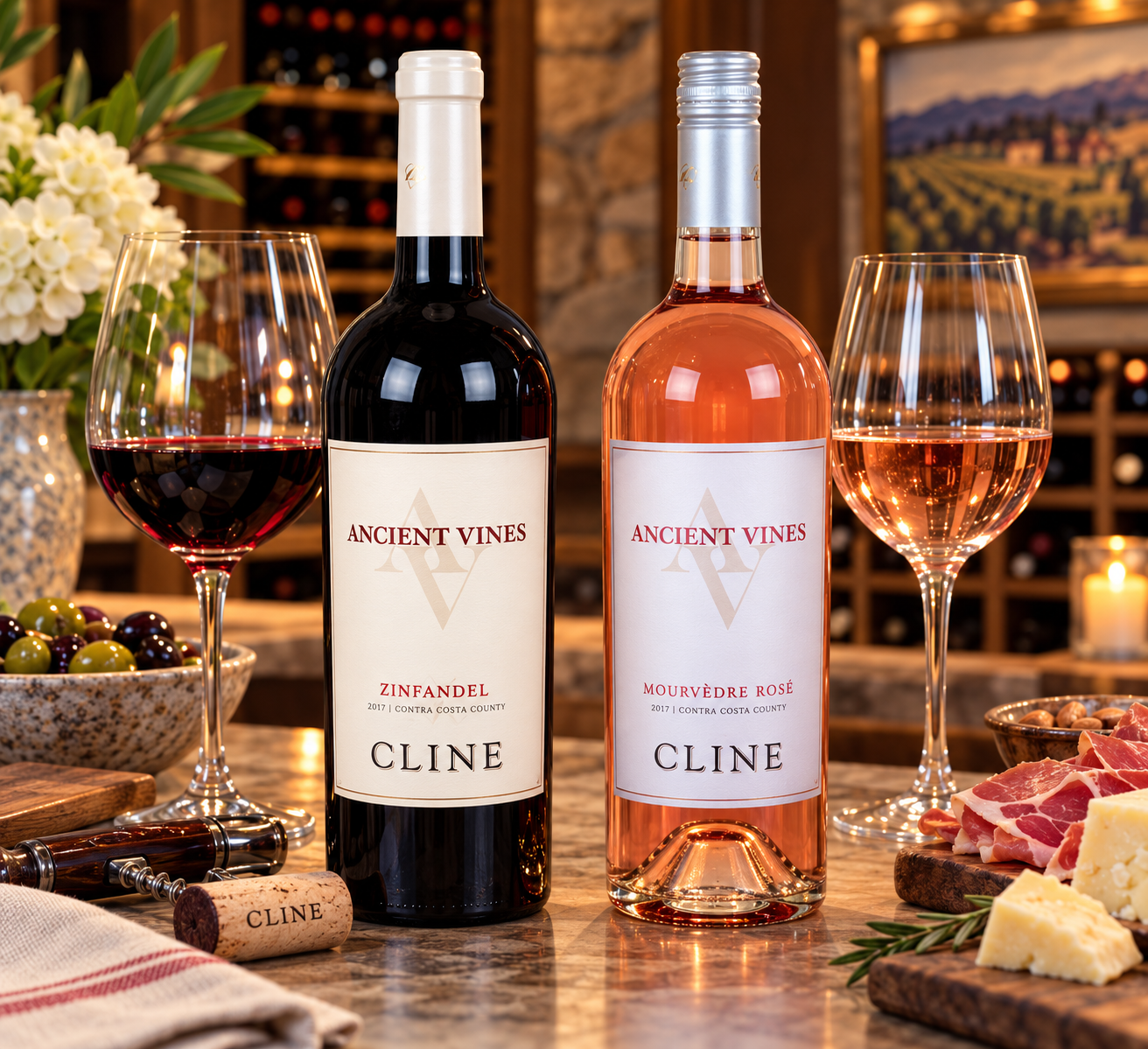
I can also recommend just about anything from Truchard, Clos Pegase, and Cline, although quite a few of the first two will exceed the $30 ceiling.

Last, but not least, Estancia Cabernet Sauvignon, perhaps the best value in a California Cab you’re going to find.  Routinely available for $9 to $12 a bottle, and $32 per four-bottle box, I bought a case just six months ago for $6 a bottle.

Back to blog posts: /winervana.com/blog/

Sanford Winery

Sanford Winery.
Sanford Winery. Click here for tasting notes.

Sanford Winery

Sanford, the first winery in Santa Barbara wine country, was established when the Sanford & Benedict vineyard was planted in 1971. Botanist Michael Benedict and his friend Richard Sanford were committed to finding a cool-climate location with just enough heat accumulation to ripen, but not over ripen, wine grapes. A place where they could plant and grow grapes and craft wines, where they hoped the quality might equal the best of Europe.

Continue reading “Sanford Winery”

Hall Craig’s Red Wine

Hall Craig's Red Wine 2014.
Hall Craig’s Red Wine 2014. Click here for tasting notes.

Hall Craig’s Red Wine 2014

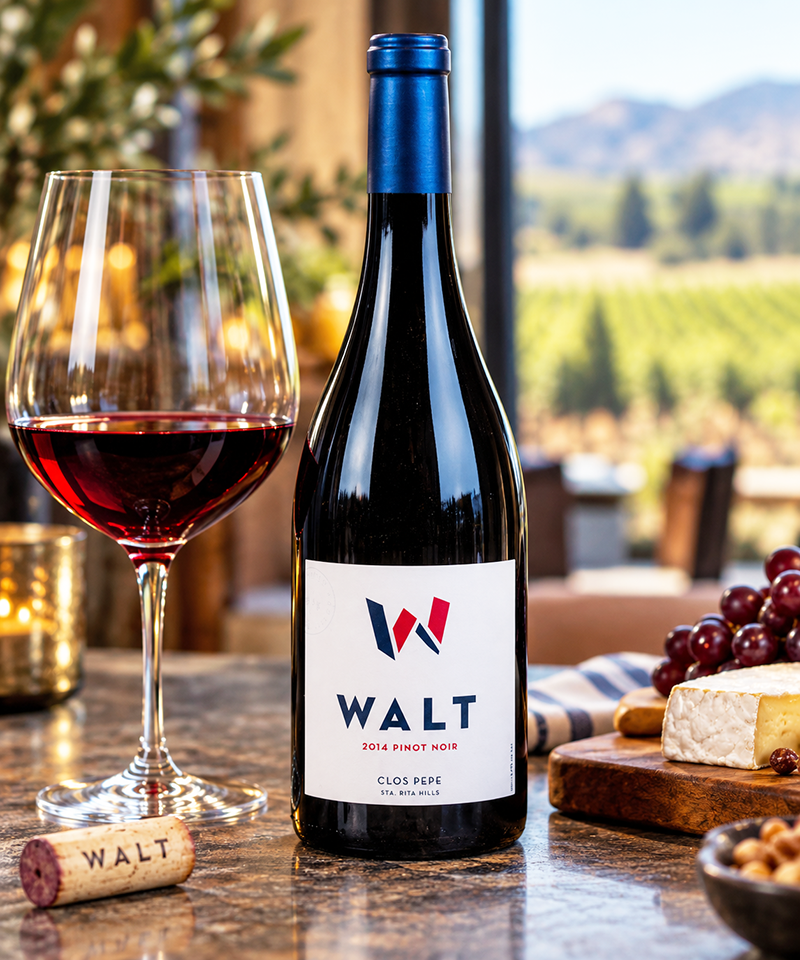
Kathryn Walt Hall has a most impressive curriculum vitae. To touch on just a few of the high points, she is the proprietor of HALL Wines and WALT Wines [family businesses she has been involved with for over thirty years], was assistant city attorney in Berkeley, California, worked as an attorney and businesswoman in Dallas, Texas, and has served on numerous non-profit and institutional boards, with an emphasis on issues related to social care and mental health. From 1997 to July 2001, Ms. Hall served as the United States Ambassador to Austria. In the midst of this, together with her husband Craig she has raised four children.

Continue reading “Hall Craig’s Red Wine”

Kelt Commodore Cognac

Kelt Commodore Cognac.
Kelt Commodore Cognac. For tasting notes, click here.

Kelt Commodore 

First, let’s talk about brandy vs. Cognac. Brandy is a liquor distilled from wine and aged in wood. (Brandy can be made from fruits other than grapes as well, but that’s a story for another time.) Cognac is brandy that specifically comes from the town of Cognac and the delimited surrounding areas in western France. (The one which has the most favorable soil and geographical conditions is Grande Champagne.) So, all Cognacs are brandy, but not all brandies are Cognac. For more detail on Cognac, click here.

Continue reading “Kelt Commodore Cognac”

Keenan Cabernet Franc

Keenan Winery Cabernet Franc
Keenan Cabernet Franc. Click here for tasting notes.

Keenan Cabernet Franc 2012

As a reviewer and source of reliable information, I am supposed to be as objective and unbiased as possible. But not today.  Keenan wines have long been some of my favorites.

Certain that mountain-side vineyards in Napa Valley could produce world-class wines, in 1974 Robert Keenan purchased 180 acres in the Spring Mountain District at an elevation of 1700 feet. Located on the eastern slope of the Mayacamas mountain range, Spring Mountain District gained recognition as an American Vineyard Appellation (AVA) in 1993. The low vigor soils unique to the region were known to create a stressful environment for vine growth, setting up perfect conditions to encourage vineyards planted on the steep, rocky, mountainsides to produce wines of great concentration, structure, and pure varietal flavors.

The original acreage Keenan acquired included the crumbling Peter Conradi Winery, founded in the late 19th century and one of the first pioneering properties established on Spring Mountain. Peter Conradi had originally planted the vineyards to Zinfandel and Syrah, but they declined when the property was abandoned during Prohibition, and by the time Keenan arrived in 1974, none of the original vineyards were producing. Keenan cleared the estate of tree stumps and rocks, extended the original vineyard acreage, and replanted the property to Cabernet Sauvignon and Chardonnay. He built a new winery using the existing stone walls from the old Conradi building, and brought in Keenan Winery’s first harvest there in 1977.

Like many such operations, the winery is a collaborative affair. Keenan’s son, Michael, took over leadership of the estate in 1998. As a young boy, he was eager to learn about winemaking and began honing his winemaking skills “on the job” under the leadership of his father, as well as renowned winemaker Joe Cafaro. Michael Keenan works in concert with General Manager Matt Gardner, Cellar Master Aristeo Garcia Martinez, and Assistant Cellar Master Ricardo Segura. Matt has been with the estate since 1995. Together, they establish winemaking protocols, aging, and the finished style of Keenan wines.

The Keenan winery.
The Keenan winery.


In the tasting room and winery itself, Michael’s wife and Artistic Director Jennifer Keenan ensures that visitors enjoy the full experience of the winery through her creative and playful interior design and sumptuous event design. She is responsible for the classic Keenan image and created the unique label design for the brand.

The Keenan’s son, Reilly, predictably has been immersed in wine culture from a very early age. He became a member of the team at age sixteen, and works during grape harvesting, hosts tastings for visitors on the estate, pours for wine events, and is the dedicated point person for many consumer and trade events.

Under Michael Keenan’s supervision, the vineyards have been systematically replanted to increase grape quality. The program focused on increasing soil health throughout the vineyards, using superior farming methods combined with organic compost and cover crops. Matching each varietal clone to its optimum location, every acre is sustainably farmed and planted with specially selected rootstock. In addition, close attention has been given to row orientation on each site, combined with efficient irrigation. The winemaking team takes a conservative approach, to encourage the varietal flavors to stand out in each bottle of wine.

The estate vineyard.


Keenan Winery produces four wines exclusively from grapes grown on the Spring Mountain Estate: Chardonnay, Cabernet Sauvignon Reserve, Cabernet Franc, and a Merlot Reserve from the Mailbox Vineyard. Keenan also offers wines produced from estate fruit blended with grapes grown in carefully selected Napa Valley vineyards: Cabernet Sauvignon, Zinfandel, and the Mernet Reserve, which is a proprietary blend of Cabernet Sauvignon, Merlot, and Cabernet Franc. The Summer Blend, an annual spring release, is composed of mostly Chardonnay and blended with small amounts of Viognier and Albarino.

Keenan Cabernet Franc 2012

This wine was produced exclusively from grapes grown on the Keenan Estate located in Napa Valley’s Spring Mountain District. The fruit was hand-picked then, after de-stemming, the must was inoculated with Montrachet yeast and fermented in stainless steel tanks. The wine aged in French and American oak barrels for twenty months.

A dark plum color in the glass, this Cabernet Franc has a nose of blackberries, black currant, and a hint of leather.  This is followed by tastes of bing cherries, and a bit of cedar, cocoa, and dust. There is snappy acidity and somewhat recessive tannins, all wrapped up in a medium to long finish.  Let this wine breath for two hours for maximum enjoyment.

Serve with Chicken Vesuvio, Rabbit with Mustard Sauce, or Beef Tenderloin with Bordelaise Sauce.

Back to blog posts: winervana.com/blog/
Fizzics DraftPour

Fizzics DraftPourFizzics DraftPour

If you love beer like I do, here’s a way to make it even better!

The Fizzics DraftPour is a portable home beer dispenser that lets you pour beer from a bottle or can and get something close to a “draft-beer” or “tap-beer” experience. It’s designed to work with most standard sizes: 12 oz cans/bottles up through larger bottles (up to 750 mL) and even some growlers.

The DraftPour uses what the company calls “Micro-Foam Technology” to dramatically improve the flavor, taste, and mouth-feel of any carbonated beer. Instead of adding gases like nitrogen or CO₂, it uses sound waves + fluid dynamics to transform the beer’s existing carbonation into very fine, uniform micro-bubbles. The result is a foamy, creamy head and a “nitro-style” texture — akin to draft beers you might get at a bar.

It is powered either by USB or standard AA batteries, making it portable and usable away from a fixed kitchen — handy for parties, tailgates, outdoor gatherings, camping, etc. The Fizzics DraftPour is lightweight and durable.

By Spirits Contributor Neal Kotlarek

www.fizzics.com/

Back to blog posts: winervana.com/blog/


Parallel 44 Winery

Parallel 44 Winery
Parallel 44 Winery. Click here for tasting notes.

Parallel 44 Winery

The story of Parallel 44 Vineyard & Winery began in 2005, when husband and wife team Steve Johnson and Maria Milano planted their first grape vines. Steve grew up in Green Bay, where his father Carl experimented early on with growing grapes. Maria grew up in Stevens Point, Wisconsin, where her Italian-born father continued his tradition of making wine for friends and family celebrations. Steve and Maria met while in school at the University of Wisconsin in Madison, and then attended law school together. While working as attorneys, they attended seminars on grape growing in Wisconsin, with an eye towards getting into the wine business.

Steve Johnson and Maria Milano

After years of searching for a location with the soil, sun exposure, and temperatures for growing grapes, they found the location that Parallel 44 now sits on. Originally, it was a simple corn field and former gravel pit. As soon as they purchased the land, they began to plant vines, a novel idea at the time.

A year after the vineyard was planted, in 2006 construction was started on the winery and tasting room. Since opening on Memorial Day weekend in 2007, Parallel 44 has continued to grow and expand. Today, all of the wines produced by Parallel 44 are either made with grapes grown in their own vineyards, or at one of the vineyards that the winery contracts with throughout the state of Wisconsin and the Upper Midwest.

The original Kewaunee facility.

To capitalize on the resort trade, Steve and Maria decided in 2013 to open a second location, located in Door County forty miles due north, where tens of thousands of tourists flock each summer.

The Door County facility.
This building was originally constructed as a tasting room in Door County under the Door 44 label. In April 2026 the Kewaunee facility was closed, production was moved here, and the Door 44 label was discontinued.

The vineyard is situated on 44° north latitude (hence the name), which is renowned for the world’s finest grape growing and winemaking regions, such as Bordeaux in France, and Tuscany in Italy. Parallel 44 shares many similarities with these regions, such as seasonal growing period, annual rainfall, and length of daylight. But, a big difference from their European counterparts is that Parallel 44 suffers through winters of subzero temperatures, adding the challenge of growing grapes on the “frozen tundra” of Wisconsin.

The estate vineyard in Kewanee. Photo: Dave Bloedum

Johnson and Milano decided to forgo the classic European varietals we are all familiar with, knowing that the vines would struggle to even survive the harsh northern Wisconsin winters, much less thrive.

So, they turned their attention to cold-climate grape varietals available for commercial planting, of which there were only a few. Most of the varietals were quite new to the world of wine and were less than 20 years old. Undetered, Steve and Maria carried on with their dream and today, 15 years later, there are approximately 7000 vines on 10 acres planted at Parallel 44.

The grape varietals they grow are known as “cool climate grapes.” This means that some of the vines can withstand temperatures as low as -36° F in winter, but as summer approaches they spring back to life!

These cool-climate varietals have the hallmark qualities of bright acidity, fruit forward aromas, and flavors that are unique to the region. Some of these varietals are Marechal Foch, Frontenac, Louise Swenson, St. Pepin, and Petite Pearl. These are the genetic cousins of such well-known varietals such as Cabernet Sauvignon, Pinot Noir, Moscato, and Riesling.

Parallel 44 La Crescent NV

The La Crescent white grape varietal was invented by University of Minnesota researchers James Luby and Peter Hemstad as part of the university’s cold hardy-grape breeding program. Since its release to the market in 2002, La Crescent has been planted with success in Iowa, Minnesota, Missouri, Montana, Nebraska, New Hampshire, New York, Ohio, Oregon, Vermont, and, of course, Wisconsin. The variety can survive temperatures to −36° F (−38° C). Those wishing to propagate La Crescent must obtain a license from the university, as they hold a patent on the grape, awarded in 2004. It has parentage in the Moscato family.

This semi-dry white wine shows pale yellow in the glass. The nose has pleasant orange blossom aromas. Next come flavors of a summer fruit basket, including peach, apricot, and citrus, with a full mouthfeel. It all ends with a refreshing, crisp finish.

Pair this selection with Lobster Bisque, Swordfish Steaks with Mango and Avocado Salsa, or Cornish Hens with Cranberry Sauce.

Parallel 44 Vintner’s Reserve NV

This dry red wine is a blend of 60% Marquette and 40% Petite Pearl.

Marquette is another University of Minnesota offering, introduced in 2006. It is a complex hybrid, one that involves vitis vinifera as well as American species. It is named after Pere Marquette, a Jesuit missionary and 17th century explorer of North America, and has been said by the university to be a cousin of Frontenac and a grandson of Pinot Noir.

Petite Pearl was bred by Tom Plocher, a well-respected northern climate viticulturist and grape breeder; currently, Parallel 44’s is the largest planting.

Winemaker Steve Johnson sees Petite Pearl as “the holy grail, so far” and “to date, the one with the most promise” when it comes to northern red grapes such as Marechal Foch and Marquette that are transforming the quality of wine from the Upper Midwest. As he explains it, compared with other cold-hardy red grapes, Petite Pearl has a more balanced chemical makeup with lower acidity and higher tannin levels.

This medium-bodied red has a nose of bright fruit, especially strawberry and blueberry. Those are complemented on the palate by plum and black cherry, balanced acidity, and light but firm tannins. There is a bit of spice and pepper, as well. The mouth-feel is somewhere between Pinot Noir and Merlot.

Try it with Peppered Salmon with Snow Peas and Ginger, Spinach and Bacon Souffle, or Boned Pork Loin with Apple Cream Sauce.

Parallel 44 Salve NV

Salve is a traditional Italian greeting that comes from the word “to be well.” This unassuming red wine is fresh and easily approachable.

The source grape is primarily Petite Pearl, with a small amount of a white varietal called Prairie Star, bred by Elmer Swenson. It produces a neutral white wine with good mouth feel, and is perhaps even hardier than Frontenac, a widely-planted cool-climate varietal. It can have a strong floral nose. Prairie Star is also consumed as a table grape. The addition of a white varietal during fermentation is a traditional practice in some other countries, including Italy, and is more common than you might expect.

This light red wine has a quite transparent ruby color. The nose shows strawberry and red cherry. That light cherry follows through on the palate, joined by a hint of cola. The finish is short, and without much tannins.

This simple but food-friendly wine would play well with Grilled Butterflied Salmon, Spinach and Bacon Souffle, or Veal Escalopes with Tomato Sauce.

Door 44 F2 Red Blend 2018

This is a 50/50 blend of Frontenac, yet another  hybrid developed at the University of Minnesota, and Marechal Foch, a French-American hybrid created in the late 19th century.  Hence, F2, or perhaps F squared. It is dark ruby-red in the glass, with aromas of red cherry and plum.  This continues on the palate, which offers a slight sweetness as well as an effervescent acidity, typical of these grapes (although no actual bubbles are present). Steve Johnson noted, “While many California winemakers would feel intimidated by the high acidities that result from our cold-climate varietals, they would yearn for the structure our acidities can provide. As F2 matures, the toast of oak will add an expression of dark chocolate, a common characteristic of an aged wine made with the Frontenac grape.”

www.44wineries.com/

Here’s a post on another Door County winery, but this one brings in juice from California rather than growing locally: Simon Creek.

And in my opinion, Anchored Roots in Door County is making wines superior to either of these.  Although they also import grapes, mostly from Washington state, they also source fruit from Wisconsin, some of it from their estate vineyard.

Back to blog posts: winervana.com/blog/

Casa Silva

Casa Silva Microterroir de Los Lingues Carmenère and Casa Silva Cool Coast Sauvignon Blanc.
Casa Silva Microterroir de Los Lingues Carmenère and Casa Silva Cool Coast Sauvignon Blanc. Click here for tasting notes.

Casa Silva

Casa Silva traces its roots back to 1892, when Emile Bouchon immigrated from Bordeaux to Chile’s Colchagua Valley. After decades of producing wines for others, in 1997 Bouchon’s great-great-grandson Mario Silva established Casa Silva to produce estate wines under the family’s own name. He had already  dedicated much of his life to recovering the old vineyards and wine cellar, and had acquired a unique understanding of the terroir in the Colchagua Valley, which is divided into the Andean sector,  influenced by the mountains, a central sector on the flatlands, and a coastal sector with significant influence from the Pacific Ocean.

Continue reading “Casa Silva”

Allaire Vodka

Allaire Vodka

Allaire Vodka

Allaire vodka is a “premium” vodka that is produced in Poland. The vodka is distilled six times (allegedly in vertical columns) and and then filtered five times, aiming for “outstanding purity, clarity and shine.” according to the producer. The mash bill (grain base) for Allaire is reportedly rye-dominant — meaning a substantial portion of the spirit originates from rye grain rather than wheat or potatoes.

Continue reading “Allaire Vodka”

Mionetto Cartizze DOCG Prosecco

Mionetto Cartizze DOCG Prosecco
Click here for tasting notes.

In 1887, master winemaker Francesco Mionetto opened his own winery in Valdobbiadene, in the heart of the Prosecco area, just north of Venice.

In Mionetto’s vineyards, some slopes roll gently towards the valley, others are much steeper. For protection from the prevailing cold alpine winds and icy rains from the north, vines are on southeastern slopes. They face the morning sun, benefiting from the early sunlight and a morning jolt of carbon dioxide, needed for sugar production. The soil characteristics are mainly alluvial, calcareous, and marly (a crumbly mixture of clays, calcium, magnesium carbonates, and remnants of shells).

The climate is generally temperate here. The area is protected by the Alps to the north and warmed by the winds of the Adriatic Sea to the east, mitigating temperatures in summer and producing rainfall that favors the proper growth of vines. In late summer, the area is characterized by great temperature variations between day and night, enabling the growth of aromatic substances in the grapes as they mature.

The Prosecco DOCG (Controlled and Guaranteed Denomination of Origin) area was established in 2009. The DOCG area is located in northeastern Italy and comprises five provinces of the Veneto region and four in the Friuli region. Grapes are grown between 50 and 500 meters (165 to 1650 feet) above sea level. The highest-quality DOCG production is in the historic “Superiore di Cartizze” micro-area, which is only 107 hectares (264 acres) in size.

Mionetto has always prided themselves on innovation, and in 1982 they introduced autoclave fermentation (also known as the Charmat Process). There is a temperature-controlled first fermentation that takes place at the facilities of their producers to create the still wine. Then the second fermentation takes place in autoclaves (large sealed tanks) instead of individual bottles. This additional temperature-controlled fermentation creates Prosecco’s characteristic bubbles, and is intended to help maintain the freshness and aroma of the grape in the bottling phase.

Mionetto Cartizze DOCG Prosecco

This Mionetto Cartizze DOCG Prosecco is bright gold in the flute, with a nose reminiscent of apple and pear, plus hints of citrus. It is soft and creamy on the palate, with an aftertaste of sugared almonds. It also features fine bubbles and a lively floral aroma,

This wine would make an excellent accompaniment to desserts, cakes, pastries, fruit salads, and tarts.

usa.mionetto.com/us/products/luxury-collection

Back to blog posts: winervana.com/blog/