Simon Creek Winery

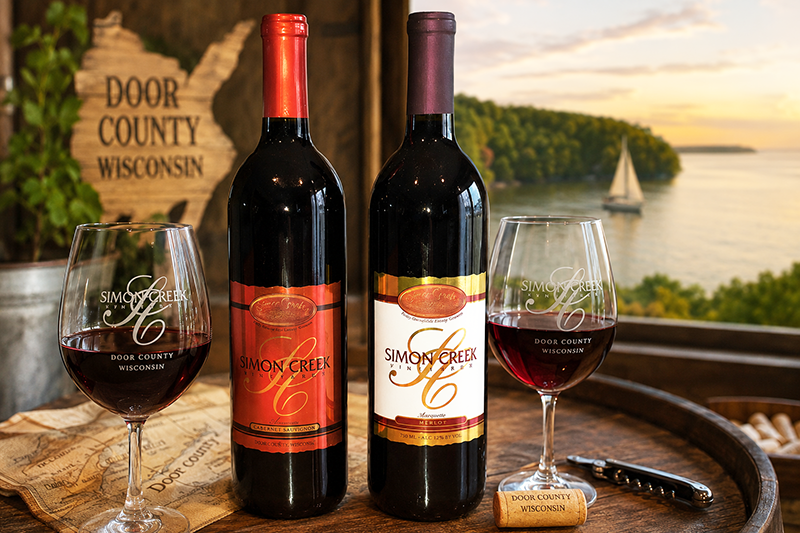
Simon Creek Cabernet Sauvignon NV and Simon Creek Merlot NV.
Simon Creek Cabernet Sauvignon NV and Simon Creek Merlot NV. Click here for tasting notes.

Simon Creek Winery

Wisconsin native Thomas J. (Tim) Lawrie had a 26-year career in the U.S. Army, including two tours in Vietnam as a combat officer, and was awarded the Purple Heart. He served as an Army Infantry Airborne soldier before finally retiring with the rank of Colonel. After which, he was almost universally referred to as, “The Colonel,” a somewhat surprising affectation for a Northerner, I think. As with most military personnel, he had assignments throughout the country, including California, where he acquired an interest in wine and wine production. Continue reading “Simon Creek Winery”

Imagery Cabernet Sauvignon and Chardonnay

Imagery Cabernet Sauvignon 2016 and Imagery Chardonnay 2016.
Imagery Cabernet Sauvignon 2016 and Imagery Chardonnay 2016. Click here for tasting notes.

Imagery Cabernet Sauvignon 2016 and Chardonnay 2016

In 1973, newlyweds Mike and Mary Benziger drove west and permanently settled in Northern California. Seven years later, Mike and and his brother Bruno Benziger purchased the historic Wegener Ranch on Sonoma Mountain in Glen Ellen, California. Hearing the Sirens’ call of the Golden State, over the next six years the four remaining siblings — Bob, Joe, Jerry, and Patsy, with their spouses — made their way to California.

Continue reading “Imagery Cabernet Sauvignon and Chardonnay”

Maxville Winery

Maxville Cabernet Sauvignon 2014 and Maxville Sauvignon Blanc 2014.
Maxville Cabernet Sauvignon 2014 and Maxville Sauvignon Blanc 2014. Click here for tasting nores.

Maxville Winery

The 1000-acre Maxville  Winery’s Napa Valley estate is located in the Chiles Valley AVA, in the Vaca Mountains, running parallel to and northeast of the Silverado Trail. The property was first planted to grape vines in 1974; today Maxville has over 100 acres of vineyard located at elevations between 900 and 1,200 feet. The volcanic soils provide a prime growing condition for wines, and Maxville practices sustainable dry farming methods in order to preserve the integrity of the property.

Continue reading “Maxville Winery”

Yao Ming Cabernet Sauvignon

Yao Ming Cabernet Sauvignon.
Yao Ming Cabernet Sauvignon. Click here for tasting notes.

Yao Ming Cabernet Sauvignon 2009

In November 2011, then-recently retired NBA star Yao Ming established his new Napa Valley winery, Yao Family Wines. But the story really begins in 2004, when Yao Ming was still in the early stages of his basketball career. Yao’s Houston Rockets teammate Dikembe Mutombo introduced him to the institution of the Texas steakhouse. Over many steak dinners, Dikembe tutored Yao on the magic of a great steak and wine pairing, and Yao became an aspiring wine aficionado.

Continue reading “Yao Ming Cabernet Sauvignon”

Grace Lane Wines

Grace Lane Cabernet Sauvignon and Grace Lane Riesling.
Grace Lane Cabernet Sauvignon and Grace Lane Riesling. Click here for tasting notes.

Grace Lane Wines

These selections are sourced from a family-owned winery in Mattawa, Washington, nestled in a bend of the Columbia river and 152 miles southwest of Seattle. The family had been farming in the area since the mid-1950s, and believed that the region’s moderate temperatures, low rainfall, and sandy soils would be ideal for wine grapes, and planted their first grapevines in the area in 1997.

Continue reading “Grace Lane Wines”

Rabble Wine

Rabble Red Blend 2015 and Rabble Cabernet Sauvignon. 2016
Rabble Red Blend 2015 and Rabble Cabernet Sauvignon. 2016 Click here for tasting notes.

Rabble Wine Company

If you are looking for affordable, approachable, easy-drinking wines, I suggest you seek out those from Paso Robles. This large but lesser-known appellation was established in 1983 (a mere toddler in wine years), and is located around the town of Paso Robles in the northern part of California’s San Luis Obispo County. Most of the growing area is classified as Region III, equivalent to France’s Rhône region. At last count, there were over 18,000 acres under vine.

Continue reading “Rabble Wine”

Black Stallion Cabernet Sauvignon

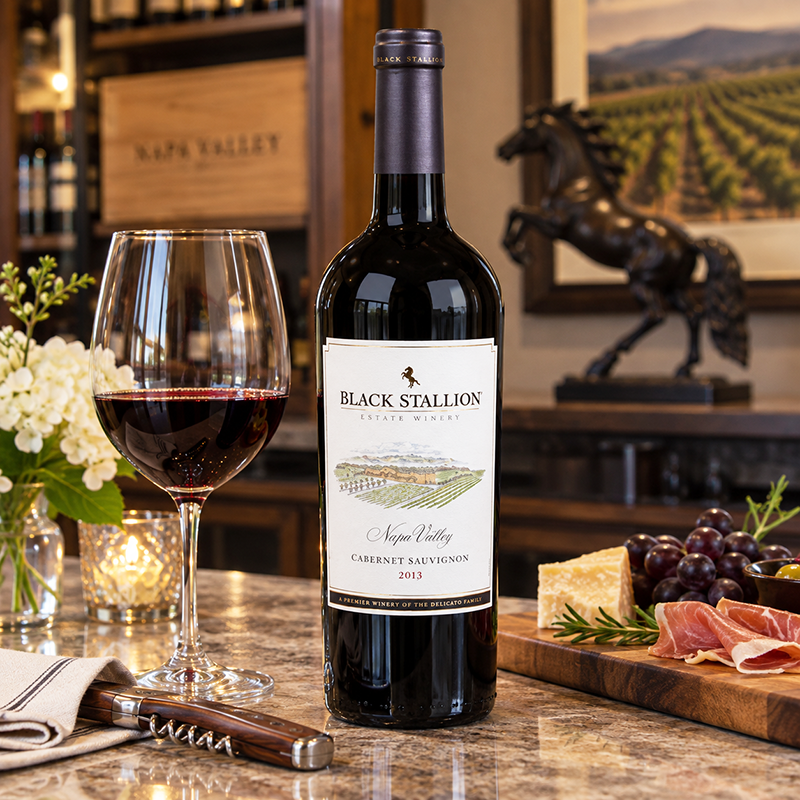
Black Stallion Cabernet Sauvignon 2013. <a href="#taste">Click here for tasting notes.</a>
Black Stallion Cabernet Sauvignon 2013. Click here for tasting notes.

Black Stallion Cabernet Sauvignon

In 1894, Gaspare Indelicato was born in the small village of Campobello di Mazara in the province of Trapani, Sicily. In 1911, at the tender age of 16, he emigrated by himself to the United States through Ellis Island, New York, as many European immigrants of the time did.

Continue reading “Black Stallion Cabernet Sauvignon”

HALL Wines

Hall Wines
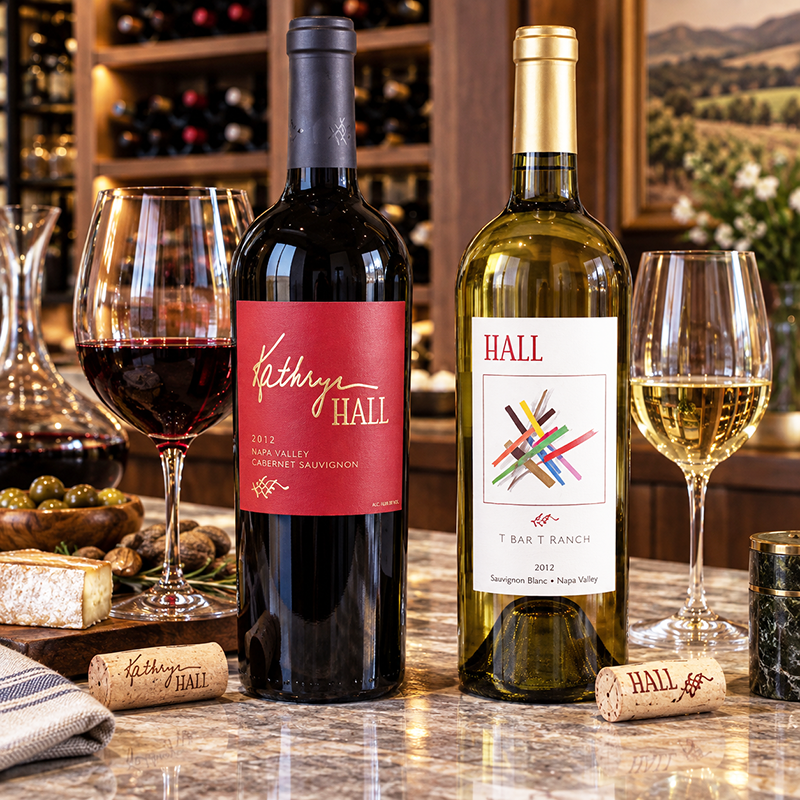
Kathryn Hall Cabernet Sauvignon and HALL T Bar T Ranch Sauvignon Blanc. Click here for tasting notes. 

HALL Wines

Kathryn Walt Hall has a most impressive curriculum vitae. To touch on just a few of the high points, she is the proprietor of HALL Wines and WALT Wines [family businesses she has been involved with for over thirty years], was assistant city attorney in Berkeley, California, worked as an attorney and businesswoman in Dallas, Texas, and has served on numerous non-profit and institutional boards, with an emphasis on issues related to social care and mental health. From 1997 to July 2001, Ms. Hall served as the United States Ambassador to Austria. In the midst of this, together with her husband Craig she has raised four children.

Continue reading “HALL Wines”

Dry Creek Vineyard

Dry Creek Vineyard

Dry Creek Vineyard

Dry Creek Vineyard was the first winery established in the Dry Creek Valley after Prohibition. It was founded in 1972 by David Stare, who came with an early vision to plant Sauvignon Blanc. Before his arrival, the valley was little more than a few family farms and prune orchards, but Stare was determined to start a winery inspired by those in the Loire Valley, which led to a viticultural reawakening in northern Sonoma County.

Continue reading “Dry Creek Vineyard”

Chateau Montelena

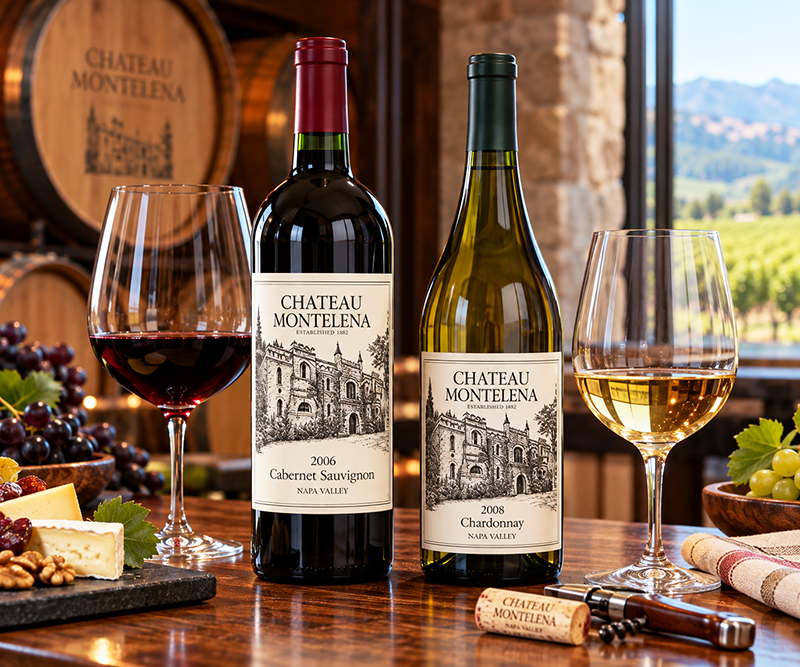
Chateau Montelena Napa Valley Cabernet Sauvignon 2006 and Chateau Montelena Napa Valley Chardonnay 2008. Click here for tasting notes.
Chateau Montelena Napa Valley Cabernet Sauvignon and Chateau Montelena Napa Valley Chardonnay. Click here for tasting notes.

Chateau Montelena

Steven Spurrier was an Englishman who once owned a wine shop in Paris that catered to the English-speaking expatriate community. In 1976, in order to drum up interest in his business, he hit upon the idea of holding a blind tasting pitting ten of France’s and California’s best producers against one another. He was able to enlist nine esteemed French wine experts as judges, among them Odette Kahn, editor of the influential Revue du Vin de France; and Christian Vannequé, sommelier of the three-star Parisian restaurant La Tour d’Argent. The French wines included the 1970 Haut-Brion, the 1970 Mouton Rothschild, and the 1973 Domaine Leflaive Puligny-Montrachet Les Pucelles.

Continue reading “Chateau Montelena”

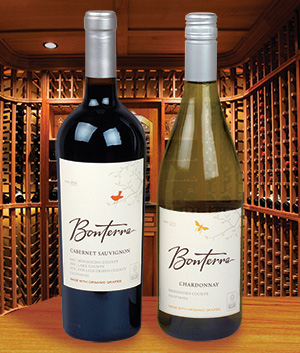
Bonterra Vineyards

Bonterra VineyardsBonterra Vineyards has been a pioneer in organic farming in California. The vines were planted in 1987, and the first wines were released in 1992, long before organic products were widely available in America. Bonterra believes that organic grapes produce the purest expressions of the varietals and land on which they are farmed.

Bonterra’s three estates (Blue Heron, McNab, and Butler) are certified Biodynamic® by Demeter, a not-for-profit with the mission of enabling successful farming in accordance with Biodynamic practices and principles.  These are simply to create and oversee a living organism which is self-contained, self-sustaining, and follows the cycles of nature. Biodynamic farming harkens back to how farms functioned centuries ago. It is a holistic view of agriculture with a high awareness of the interconnectivity among earth, plants, animals, humans, and even the moon.

There are nine Demeter-certified preparations made from herbs, minerals, and manures. These are applied to the soil and vineyards in very small doses to enhance soil fertility with increased micro-organism development and photosynthetic activity.

Yarrow, chamomile, stinging nettle, oak bark, dandelion, and valerian each play a role in strengthening, and in some cases remedying, weaknesses in the vineyards. Teas and tinctures are made from fresh or dried plants, and are sprayed to increase active regeneration on the farm.

In addition, animal “partners” play an essential role in the ecosystem. The vineyards provide chemical-free sanctuaries for bees, supported by native plants which bloom throughout the seasons. Chickens roam the rows, eating weeds and insects that can harm the vines. Their scratching and pecking aerate the soil and provide additional nutrients to the vines. December through March, around 2,000 sheep snack on the cover crops and weeds as they “landscape” the vineyards, adding beneficial fertilizer to the soil as they graze.

Bonterra  Mendocino Chardonnay 2014

This wine opens with a hint of crème brulee, followed by aromas of pineapple and citrusy lemon. The palate features flavors of green apples, pears, and citrus, supported by a clean minerality. The wine underwent malolactic fermentation in previously-used or neutral oak in order for its fresh fruit characteristics to shine through. New oak was used for just 16% of the wine to provide a vanilla note.

Enjoy this best-buy wine with seared swordfish with avocado relish and roasted broccoli, or crunchy pecan chicken with lemon ginger sauce.

Bonterra  Cabernet Sauvignon 2014

This red is very much in the European style, with relatively subtle flavors of cherries and currants. Those are present on the nose as, well, with the addition of a bit of toasted oak. The wine finishes with astringent tannins and a lingering finish.

Serve this up with grilled chicken on rosemary skewers, lamb chops with juniper berry marinade, or sirloin tips Quasimodo.

www.bonterra.com/

Back to blog posts: https://winervana.com/blog/

La Merika Wines

La Merika Wines
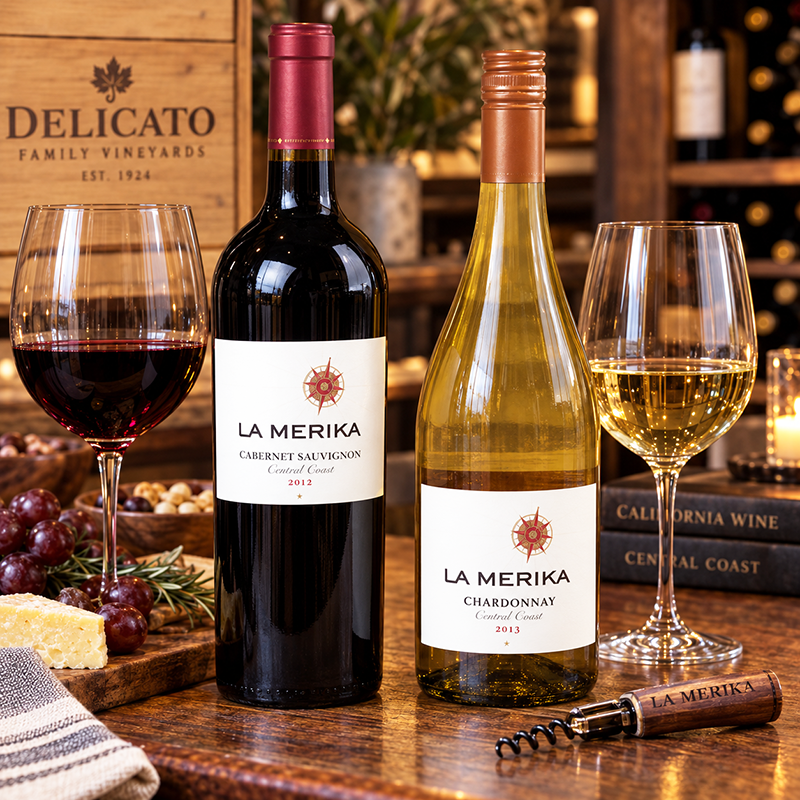
La Merika Cabernet Sauvignon and La Merika Chardonnay. Click here for tasting notes.

La Merika Wines

There is a theory among some historians that America was discovered by Europeans decades, or even centuries, before Christopher Columbus by a little-known explorer named Henry Sinclair, who may have been a member of the Knights Templar. In Templar symbology ‘Merika’ is a western star toward which their ships would sail, or mounted knights would ride. It is suggested that the name La Merika (The Star) is what led to the naming of the continent America, rather than after Amerigo Vespucci, an Italian explorer who is credited with describing the New World.

Continue reading “La Merika Wines”